Smarter risk stratification & patient segmentation with Ardens
Risk Stratification
Ardens helps primary care teams, PCNs and Integrated Neighbourhood Teams (INTs) identify priority patient groups and coordinate interventions where they are most needed, supporting more proactive, joined-up care across local populations. By bringing together population health intelligence, risk stratification and continuity-of-care insights, Ardens Manager enables services to target resources effectively, reduce health inequalities and improve long-term population health outcomes.
Ardens Manager includes a wide range of risk stratification approaches, from whole-population models to condition-specific cohorts and continuity-of-care segmentation, helping organisations identify patients at greatest risk of deterioration, unplanned care use or poor outcomes, while supporting multidisciplinary working across practices, neighbourhood teams and wider system partners.
Included Models
Ardens Manager brings multiple nationally recognised risk stratification and patient segmentation models together in one place, making it easier to act on data.
Whole-population Approach
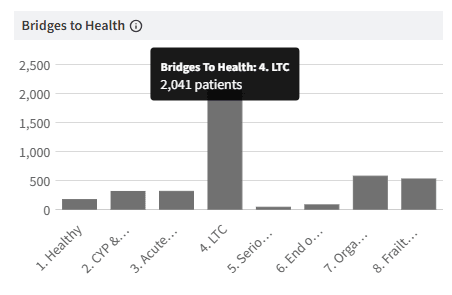
Bridges to Health: Segments the whole population into groups based on health status, complexities and care needs, supporting service planning and proactive population management.
Johns Hopkins (Recorded): Groups patients by clinical complexity and expected healthcare utilisation, helping identify higher-need cohorts and forecast demand based on numeric SNOMED code.
QAdmission (Predicted): Predicts risk of unplanned hospital admission, supporting targeted prevention and proactive intervention.
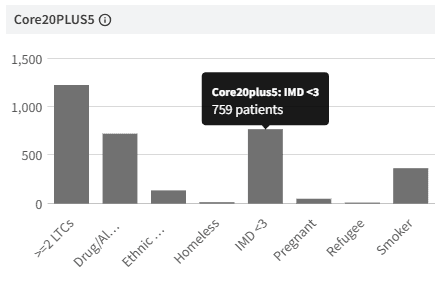
Inequalities Segmentation: Breakdowns by Core20PLUS5, IMD and Health Deprivation to identify unmet need and variation across populations.
Whole-population Approach
Bridges to Health: Segments the whole population into groups based on health status, complexities and care needs, supporting service planning and proactive population management.
Johns Hopkins (Recorded): Groups patients by clinical complexity and expected healthcare utilisation, helping identify higher-need cohorts and forecast demand based on numeric SNOMED code.
QAdmission (Predicted): Predicts risk of unplanned hospital admission, supporting targeted prevention and proactive intervention.
Inequalities Segmentation: Breakdowns by Core20PLUS5, IMD and Health Deprivation to identify unmet need and variation across populations.
Whole-population Approach
Bridges to Health: Segments the whole population into groups based on health status, complexities and care needs, supporting service planning and proactive population management.
Johns Hopkins (Recorded): Groups patients by clinical complexity and expected healthcare utilisation, helping identify higher-need cohorts and forecast demand based on numeric SNOMED code.
QAdmission (Predicted): Predicts risk of unplanned hospital admission, supporting targeted prevention and proactive intervention.
Inequalities Segmentation: Breakdowns by Core20PLUS5, IMD and Health Deprivation to identify unmet need and variation across populations.
Condition-specific Approach
UCLPartners: Condition-specific risk stratification for long-term conditions including hypertension, diabetes, asthma, COPD, and SMI to prioritise higher-risk patients.
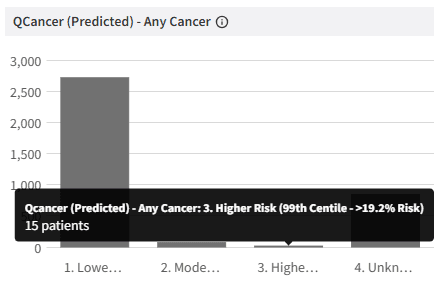
QCancer (Predicted): Predicts individual risk of specific cancers to support early detection and targeted case-finding.
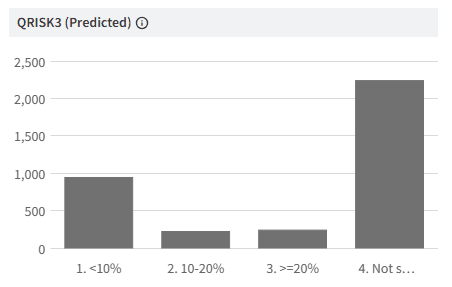
QRisk3 (Recorded & Predicted): Estimates 10-year cardiovascular disease risk to support prevention, intervention and population targeting.
eFI (coming soon): Identifies older patients living with frailty using the electronic Frailty Index (eFI), supporting proactive care, risk stratification and prioritisation of patients at increased risk of adverse outcomes such as falls, hospital admission and reduced independence.
Condition-specific Approach
UCLPartners: Condition-specific risk stratification for long-term conditions including hypertension, diabetes, asthma, COPD, and SMI to prioritise higher-risk patients.
QCancer (Predicted): Predicts individual risk of specific cancers to support early detection and targeted case-finding.
QRisk3 (Recorded & Predicted): Estimates 10-year cardiovascular disease risk to support prevention, intervention and population targeting.
eFI (coming soon): Identifies older patients living with frailty using the electronic Frailty Index (eFI), supporting proactive care, risk stratification and prioritisation of patients at increased risk of adverse outcomes such as falls, hospital admission and reduced independence.
Condition-specific Approach
UCLPartners: Condition-specific risk stratification for long-term conditions including hypertension, diabetes, asthma, COPD, and SMI to prioritise higher-risk patients.
QCancer (Predicted): Predicts individual risk of specific cancers to support early detection and targeted case-finding.
QRisk3 (Recorded & Predicted): Estimates 10-year cardiovascular disease risk to support prevention, intervention and population targeting.
eFI (coming soon): Identifies older patients living with frailty using the electronic Frailty Index (eFI), supporting proactive care, risk stratification and prioritisation of patients at increased risk of adverse outcomes such as falls, hospital admission and reduced independence.
Continuity of Care Approach
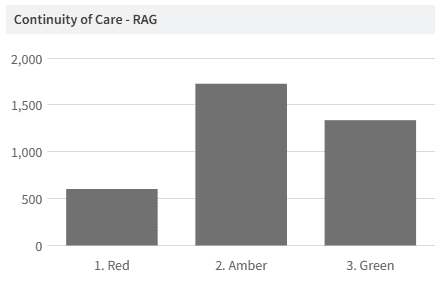
Continuity of Care RAG: Categorises patients by continuity need (Red, Amber, Green) to identify high-continuity benefit cohorts for proactive, consistent care. Ardens supports continuity of care through a combination of Ardens Manager cohort identification and clinical point-of-care tools, enabling proactive, consistent care delivery.
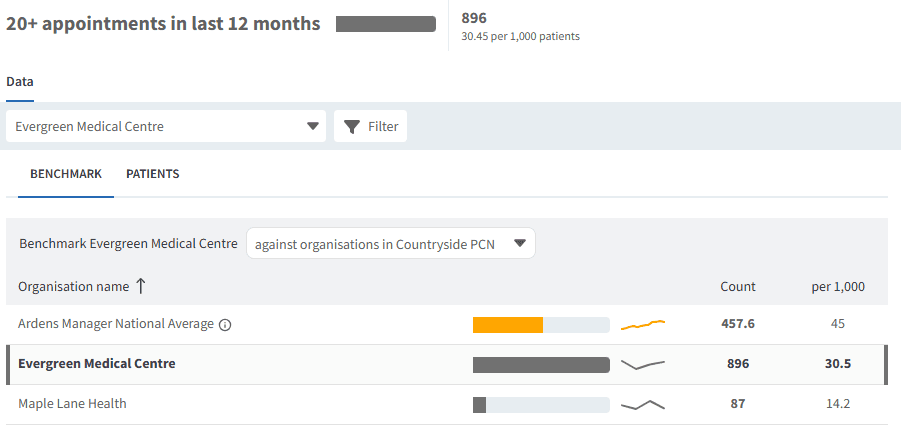
Frequent Attenders: Identifies high-utilisation patients to support demand management and proactive support.
Continuity of Care Approach
Continuity of Care RAG: Categorises patients by continuity need (Red, Amber, Green) to identify high-continuity benefit cohorts for proactive, consistent care. Ardens supports continuity of care through a combination of Ardens Manager cohort identification and clinical point-of-care tools, enabling proactive, consistent care delivery.
Frequent Attenders: Identifies high-utilisation patients to support demand management and proactive support.
Continuity of Care Approach
Continuity of Care RAG: Categorises patients by continuity need (Red, Amber, Green) to identify high-continuity benefit cohorts for proactive, consistent care. Ardens supports continuity of care through a combination of Ardens Manager cohort identification and clinical point-of-care tools, enabling proactive, consistent care delivery.
Frequent Attenders: Identifies high-utilisation patients to support demand management and proactive support.
Patient View
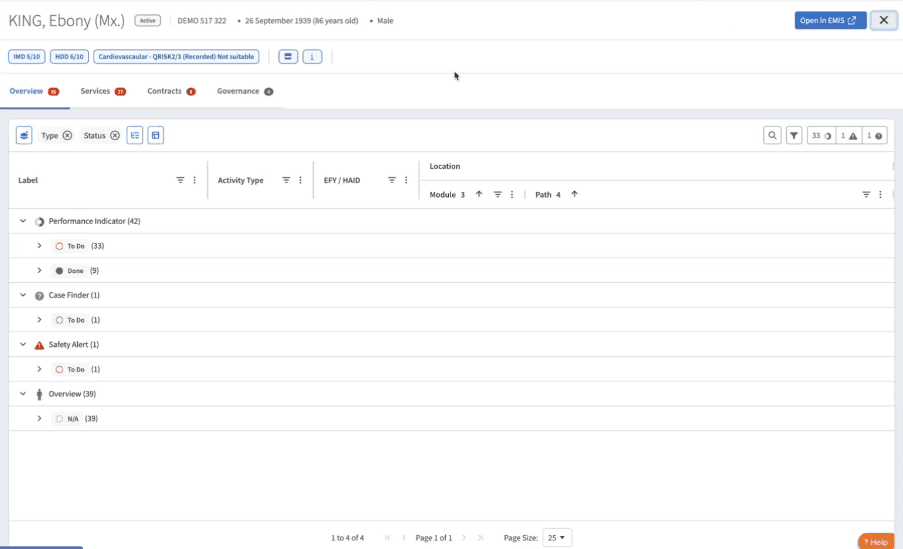
Patient View brings all relevant Ardens Manager insights together at individual patient level, turning population risk data into clear, actionable clinical intelligence at the point of care.
With Patient View, clinicians and care teams can see the following for each patient:
Risk groups, deprivation scores and long term conditions
Safety alerts, case finders and other outstanding actions
Outstanding contract work across national and local commissioned services
Patient View
Patient View brings all relevant Ardens Manager insights together at individual patient level, turning population risk data into clear, actionable clinical intelligence at the point of care.
With Patient View, clinicians and care teams can see the following for each patient:
Risk groups, deprivation scores and long term conditions
Safety alerts, case finders and other outstanding actions
Outstanding contract work across national and local commissioned services
Patient View
Patient View brings all relevant Ardens Manager insights together at individual patient level, turning population risk data into clear, actionable clinical intelligence at the point of care.
With Patient View, clinicians and care teams can see the following for each patient:
Risk groups, deprivation scores and long term conditions
Safety alerts, case finders and other outstanding actions
Outstanding contract work across national and local commissioned services
THE BENEFITS
Risk Stratification & Patient Segmentation with Ardens
✓ Proactive, personalised care delivery - Identify higher-risk patients for targeted intervention, shifting from a reactive approach to proactive care, and ultimately improving health outcomes
✓ Actionable insights at population & patient level - Our combination of segmentation tools enable targeted service planning and prioritisation, as well as personalised patient care, supporting GP practices, PCNs, groups and ICBs
✓ Reduced health inequalities - Segment your population to identify variation, underserved groups, and contributing factors, helping to address inequalities
✓ Time-saving tools - Seamlessly integrated with EMIS Web and SystmOne, Ardens combines point-of-care tools with population analytics to ensure insights translate into real clinical action
If you'd like to explore how Ardens can support your local risk stratification and population health management priorities - or if you use a model we don't yet cover - we'd love to hear from you.
Interested in the complete
Ardens solution?


Interested in the complete Ardens Solution?
Solutions
Solutions
Solutions
Solutions

Products
Solutions
About
Support & Training

©2026 Ardens · All rights reserved.
Products
Solutions
About
Support & Training


©2026 Ardens · All rights reserved.